Exciting British Artist Dan W Griffin today announced ‘Dignitastic! Where Art Meets a Terminal Lung Cancer Diagnosis’, an exhilarating new art exhibition at 44AD Artspace Gallery in the beautiful Roman Spa City of Bath.
To celebrate, he is gifting the city’s Royal United Hospital a unique work created exclusively for the staff and patients of the Oncology Department. The presentation will take place at the hospital in August at a time to be confirmed.
A LIFE TRANSFORMED; FIRST BY A TERMINAL DIAGNOSIS, AND THEN BY THE ONSET OF A DEVASTATING PANDEMIC & LOCKDOWN
Diagnosed in January 2020 with an ultra rare form of lung cancer, Dan, a filmmaker, had barely begun to come to terms with the finality of his existence when the Covid pandemic struck and the nation entered the surrealism of lockdown. “It had crossed my mind that the Apocalypse was upon us” Dan said, “but I had thought the same thing when a corrupt orange sociopath and former game show host was elected to the US presidency. I didn’t know what was going on with the world, I just had an impulse to paint. And so I did.”
Dan’s work is greatly inspired and influenced by the natural world and the elements, consistently reflecting a parallel between his own stark reality and the raw, brutal power and stunning beauty of the Earth. “My artistic mission is, and has always been to fill my life with colour. Not all cancers are terminal, but each and every diagnosis is, for patients, their families and their friends, dark and often frightening. It’s not much, and I wish I could offer more, but I hope my work can introduce a little colour to the darkness; perhaps a little optimism, a dash of positivity to us all.”





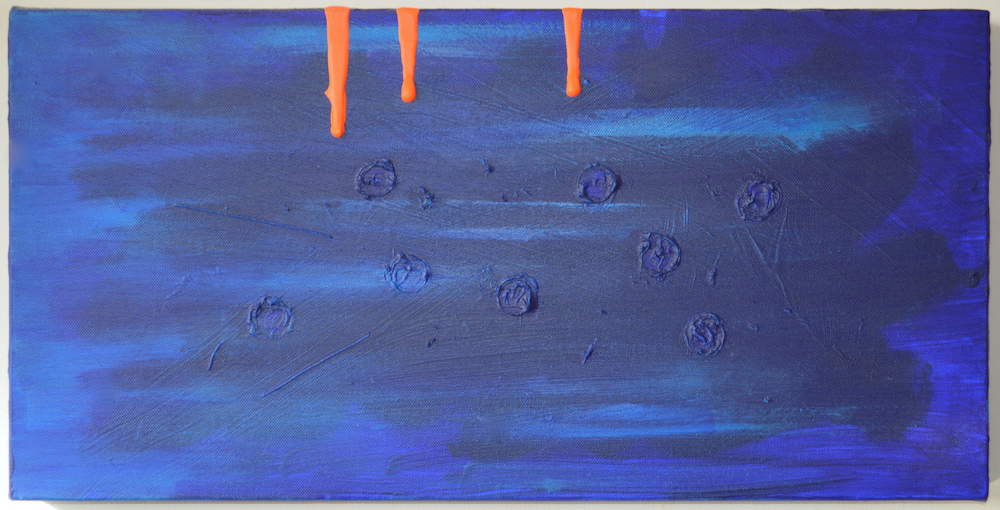
Dignitastic! Where Art Meets a Terminal Lung Cancer Diagnosis is Dan W Griffin’s first ever public exhibition. It opens August 24th at 44AD Artspace Gallery at 4 Abbey Street in the beautiful Roman Spa City of Bath for five days. Private and One-on-One Guided Views are available. For more information or to apply, please contact the gallery, or visit the website.
When hearing of the government’s education recovery package, I couldn’t decide which I considered more significant – the fact that the circa 1-billion-pound package was only a tenth of the recommended spending amount, or that the government’s (voluntary) chief advisor on education recovery, Sir Kevan Collins resigned once the announcement was made.
Arguably, you don’t get the press exposure of this without both of these elements; that an advisor can feel so disappointed by a decision that he moves away from an opportunity to continue to influence policy that support children, something he has worked hard on all his life, or that the government can offer 12 billion pounds less than what has been asked for education recovery.
Perhaps Sir Kevan’s estimate of requirements for supporting children was overly ambitious considering the current climate and clamber from all circles for extra funding.
Funding is often the reason that educational programmes and activities fail, the reasons for this can generally be put into two categories. Firstly, external funding may be sourced for a programme to run for a set period of time, one, two, three years if lucky and then that funding ceases causing a programme to stop and the opportunity of full impact not to be realised.
The second, which relates to the government’s education recovery package, is that not enough funding is received. Schools and programmes that receive limited funding will struggle to make a positive impact on the lives of disadvantaged children compared to those setting with more funding.
As we’ve seen educational inequality has worsened significantly during the pandemic. This wrecks opportunities for young lives; diminishes the creative and innovative talent available for future economic prosperity and will increase the future demands on an already exhausted and expensive statutory services.
This is why St John’s joined 240 other leaders from across the business, education and charity sectors by signing an FEA-led open letter, urging the Government to invest further in their stated intention of helping pupils.
St John’s is just at the beginning of our educational funding journey. Questions of amounts of funding, sustainability and long-term impact will lead us to continually challenge ourselves and our decisions as to how we can best serve children and communities.
– Sam Gillett, Head of Delivery and Impact, St John’s Foundation
“I look forward to the sessions and feel a sense of family and belonging despite being apart from so many of my own immediate family. I am and always will be so grateful.”
Our lives are lived at such a pace these days; we go from one meeting to the next, one phone call to the next, barely stopping to breathe.
I’d been introduced to a brilliant breathing technique by a friend of mine who is now a Life Coach, and I found it so helpful. The technique enabled me to slow down and be calm, even when faced with stressful situations.
I began to think that if I found it this helpful, then others would benefit too, so I created Breathe&Begin. It started exclusively as an offering to the staff at St John’s and then due to demand, it expanded to include a wider community around Bath. The concept was to help people to engage with the day, in a focussed and calm way. Each day would offer a short, themed reflection, with quotes (from businesspeople to world leaders), a verse from the bible, finished with a prayer.
After just a few weeks of hosting in-person weekly sessions with a small group of people, we found ourselves in lockdown.
I decided to establish an online Breath&Begin community to for new and existing members to join. Via the St John’s Facebook page I began to lead sessions Monday to Thursday mornings, mostly with about 20 – 30 people engaging with it each day. After the first lockdown ended, I went from four days a week to Tuesday and Thursday mornings. During the times of isolation people found the sense of community helpful:
“Jacky’s Breathe and Begin sessions have been such a help and comfort during the long months of lockdown. Her soothing voice and her breathing technique along with her pertinent and thought-provoking quotes and prayers have taught me to relax and start the day in a positive and uplifting way. Jacky has also helped to alleviate loneliness and the feeling of isolation the pandemic has brought and to appreciate the small things and blessings we still have.” Elspeth
“Logging on and seeing Jacky’s smiling face welcoming you is such a lovely start to the day. With her soothing voice and non-judgmental air, you allow yourself to be drawn away from the world of deadlines and commitments and to just concentrate on being present. We were all so excited when Jacky joined St John’s and she’s such a great advocate for bringing people together, even in times when we are separated from one another” Cathy
It’s been a privilege getting to know some of the people who have been regularly tuning in. Many of us found focusing hard during lockdown due to the external noise around us and many participants found finding ways to do this useful:
“Often at the beginning of my working day I feel quite overwhelmed.… Breathe and begin has been a gift as it grounds me in God and calms my body too through the breathing techniques. The overwhelmed state often results in a lack of focus and then can result in a disabling panic which in turn means I achieve little which can be a vicious cycle… There is a real benefit too in not being expected to do anything but just be and to be ministered too…. Thank you…” Ellie
We all need to ‘belong’ and that was pretty hard during the lockdowns. As we ease out of this third lockdown, we’ve started back in the Chapel on Tuesday mornings, but as Breathe&Begin has become a community in its own right, the Thursday mornings continue online. Everyone is welcome, and I’d be delighted to see the two groups grow.
Just slow down.. and breathe…
 Reverend Jacky Wise
Making a real difference to the people, organisations and infrastructure in Bath and North East Somerset has always been St John’s guiding principle. For the last 847 years, we have used our activities, funding and knowledge to positively impact individuals in our community.
Last February, our strategy evolved to not only focus on the wellbeing of older adults, but to also support every child, under the age of twelve, to grow into a healthy, happy and educated member of our community. The introduction of this strategy has set us on a new and unknown trajectory and had us asking the question ‘How do we accomplish such a challenging feat?’
We started by structuring the Foundation Fund around four specific areas of focus; nutritious food daily; safe spaces to go outside of school; support for behavioural and emotional needs and extra educational support. We decided to focus on these four key areas to help us achieve our vision of significantly reducing the local authority’s disproportionate educational attainment gap (this is the difference between the educational levels of children in deprived communities compared to better off peers).
However, to have the biggest impact on the most children possible, we knew we also needed to align with partner organisations that shared our ambition.
The importance of partnership working cannot be understated – a shared vision and an overarching purpose drives results and creates more opportunities for those that need them the most.
One of the organisations that we have partnered with and supported through funding and shared knowledge, is Bath Recreation. Alongside the Medlock Charitable Trust, we are working together to help shape their newly-launched Glasshouse Academy Programme.
The Academy aims to support cohorts of children from Year 5 to Year 13, through regular out-of-school sporting activities. The recreational programme helps develop values and skills that will serve children as they go through life.
Leading the charge on the Glasshouse Academy programme is Bath rugby legend, Matt Banahan. Matt will be guiding children to make good choices, on and off the sports field. His professional career and first-hand, personal experiences make him the perfect person to lead such an initiative.
Sports development is the main feature of the programme, yet not the only one; the Academy hopes to support children as they reach further education, apprenticeships, or employment and equip them with the necessary skills for a successful future. The programme has been designed to create opportunities, to raise aspirations and to release potential. These ambitious goals align whole-heartedly with those of St John’s Foundation Fund.
Working alongside Bath Recreation helps us both achieve our long-term aim of bettering the lives of children in our community. Together we can develop local networks and identify future initiatives that support disadvantaged and vulnerable groups. We continue to build connections with local schools, helping us to identify their needs and understand how we can best support them through The Foundation Fund.

Cressida Cowell: Children’s Laureate leads call for £100m primary school library fund
This recent article, that made national news, highlights how the level of a child’s literacy is a key indicator of how well they will go on to do in later life, with those with poor reading and writing skills far more likely to struggle than their better-read peers
Why is ring-fenced funding needed?
Astonishingly, there is currently no statutory provision for school libraries, with funding for libraries dependent on the specific budget of schools, multi-academy trusts, and local authority budgets. This causes a large gap to widen between schools from communities with higher deprivation levels and those from more affluent areas.
The sort of books deemed ‘reading for pleasure’ tend to be near the very bottom of priority lists for school funding as they do not form part of the general early year’s curriculum and so are not able to be read by young primary-aged pupils. Unfortunately, schools are forced to use their limited resources wisely and those books not on the curriculum are the first casualties. This can mean that children from poorer backgrounds don’t get the opportunity to read ‘interesting’ or ‘exciting’ books such as Cressida Cowell’s How to Train Your Dragon. This, in turn, can make it very hard for children to develop a real love of reading, instead of seeing it as a chore that must be endured not enjoyed. Those children unable to hone their ‘reading for pleasure’ skills are unlikely to develop their literacy skills to the same level as a child who is an avid reader.
Where does the funding come from for ‘reading for pleasure’ and stocking libraries?
The wealthiest schools have sufficient budgets to be able to pay for good libraries and books to fill them and other schools that may not have their own resources but are located in affluent areas also tend to benefit from that affluent community. This is commonly achieved through local Parent Teacher Associations (PTAs). PTAs from wealthy neighborhoods are able to generate large amounts of money through fundraising and sourcing funds from more affluent families and friends. They also tend to have better connections to businesses and networks to further help source resources for their schools. Schools situated in more deprived areas are not able to raise large amounts of money from the families of their children, nor do they generally speaking have good connections to businesses or wealthy benefactors. Even when schools from disadvantaged communities do receive literacy support from funders and bodies such as the Department for Education, this funding is generally not given to pay for reading resources but, rather, staff time, training, and development.
St John’s funding
Recently, we awarded funding to a number of local schools from deprived communities and we gave the headteachers from these schools the freedom to use the funding in any way they wished that they felt would best support the children. Almost all of the schools chose to spend a portion of that funding on books, which is very telling and just goes to show how little resource is available in this area. Even so, the books that were purchased were educational, ‘decodable’ books and texts, not the reading-for-pleasure books such as ‘How to train your dragon’.
By way of conclusion, we wholly endorse the ring-fencing of funding to bolster/create libraries for schools from deprived communities. It would be a hugely valuable initiative and help level up the playing field when it comes to children’s literacy and education.
Twelve months ago, the pandemic brought an abrupt and unexpected halt to St John’s over 55s activities programme. Turning what could have been a negative situation, into a golden opportunity, our team thought creatively about how they could continue offering those community outreach services that have the greatest impact on users. We spoke to the team 12 months on to find out how they’ve adapted and furthered their reach:
How has the pandemic affected the work you do for the community and how have you modified your way of working to meet the needs of your audience?
One of the primary aims of our service is to reduce levels of isolation and loneliness in over 55s – something the pandemic has inevitably caused an increase in. With the onset of lockdown and no immediate end in sight, we made the decision to offer online classes. While it took some time for the infrastructure to be implemented, as we were new to it too, in June 2020, we were in a position to offer a variety of online classes. These ranged from exercises like yoga, tai chi, dance; to watercolour art classes, stitch, and even a cook-along.
While we expected some of our regular participants to join, we hadn’t foreseen how popular the classes would be with the wider community. Demand meant we had to add additional classes and our reach spread throughout BaNES into the surrounding areas, and even as far as Yorkshire!
The feedback we received from the online attendees was overwhelming; for many people who are lonely or isolated, it became their only chance for conversation and met their physical and social needs. To have a weekly, recurring activity brought schedule to days, with something to look forward to. As we go forward, we’ll continue listening and learning from our feedback and making it even more accessible. We understood that technology was a barrier for some, which is why we offered additional support, helping attendees master new technology that became a lifeline throughout 2020.
These two quotes from participants sum up what many felt about our sessions;
“The current sessions are wonderful, and personally I feel they have helped me so much, mentally & physically, through the strange times we have experienced. I live in Timsbury and would find travelling into Bath difficult and I certainly would not feel comfortable meeting face to face for quite some time yet.”
“The classes have been a lifeline to me as I have been shielding since last March” Feedback from watercolours participant”
Looking to the future, government guidelines will allow in-person classes to commence on the 24th of May. However, many still won’t feel comfortable attending from this date so we must adapt to our new normal. To do this, we will be offering a hybrid experience with the opportunity to join classes online or in person. This wouldn’t have been an option pre-pandemic and it means our service will reach hundreds of more people.
We don’t plan on stopping here either – we have seen the positive impact our service has had on the physical and mental health of participants and we want as many people as possible to experience these benefits. We are looking to work with similar service partners to help expand the service further than B&NES alone.
The next big challenge, for service providers throughout the UK, will be reaching those who don’t have access to computers or smartphones and so are unable to take advantage of the lifeline that the internet has become too many. Luckily, we feel up for the challenge.
To book onto one of our online activity classes, click here.
Tuesday 8th March marks International Women’s Day. Significantly, two-thirds of the workforce at St John’s are female, so it is fitting that today, we shine a spotlight on their achievements, raise awareness against bias and take action for equality. This is a focus for us not just today, but all year round; we actively champion a workforce that empowers females, while supporting and respecting them. To mark the occasion, we have collected an array of stories from our female staff that celebrate women’s achievements, while raising awareness of key issues.
Smashing stereotypes – Jennie Crosfield, Finance Manager
In a previous role, I was told that perhaps I would be better at my job and exude more confidence if I wore heels… On a second occasion, I was on an assignment with a male colleague, who told me that he didn’t think sexism was real because he had never seen it. We worked for a company that had an almost entirely male Board.
I feel really lucky to work for a Charity with so many strong female leaders – and also a CEO who champions his colleagues. As a woman, I have always felt supported and respected at St John’s; this is something I never take for granted.
So often in my career, I’ve seen women play down their own abilities. As the manager of two brilliant women, I like to remind them how incredible they both are at every opportunity. I want them to have the confidence to go after what they want because, ultimately, I don’t believe confidence at work comes from wearing high heels, I think it comes from being really great at your job.*
*AKA knowing your shit.
Reinforcing commitment – Becky Tutton, Funding Officer
When I think about inspirational women, it isn’t celebrities or well-known females that come to mind, but the females that have empowered me in my life, including my mother and my friends who all overcome traumas or challenging obstacles.
I have also been inspired by colleagues, past and present, within the health and social care sector. One of my favourite quotes is “success isn’t about how much money you make but the difference you make in people’s lives.” This was the sole reason I decided to leave a career in retail management and get back into a profession that has the greatest impacts on others.
It is here at St John’s where I came across a different type of female leadership. These women are strong and intelligent, but most importantly they empower me, they encourage and inspire me to be the best I can, on both a personal and professional level. It’s true what they say about women that support other women, always being more successful.
Celebrating women’s achievements – Clare MacLeod, Marketing Manager
When I was made redundant from a previous role, my confidence was at rock bottom. I was hired to do freelance work for a female contact of mine, who taught me how to believe in myself again and find the confidence that I had lost in my own ability. When I couldn’t see potential in myself, another female saw it for me. This is something I will remember forever and try and instil in others. We don’t all have the same confidence, skills or knowledge, but we all have something to add to a room and we need to encourage each other into seeing this. We have a responsibility to do so. It is only through the encouragement, support and opportunities given to me by the female leads in my life, that I have succeeded in my career. On a daily basis, I feel so lucky to be surrounded by strong females and I take such joy in empowering each other to thrive in our own right.
Challenging bias – Caroline Bee, Director of Finance
I was promoted when my eldest daughter was just three days old. I have vivid memories of breast feeding her when she was just a few weeks old, in between meetings to recruit my replacement. I returned to work full time when she was five months old.
I was the only full-time, working mother of a baby at my company and amongst my peers. I felt judged for being a fraud, neither a dedicated worker (yawning in meetings and rushing off to collect a sick baby) nor a dedicated mother (how could I do that to my baby and why don’t I have photos at work of my baby?! Actually, because it broke my heart to see them). But this judgment was rubbish. Most of it was in my head and the real prejudice not worthy of my tears. Thankfully, times have moved on over the past 15 years, but I could have done with a few more champions to look up to and a bit more faith in myself.
So I say – pursue whatever you want to, do it how you want to do it, but encourage others every step along the way in their own pursuits, even if it is not what you would do.
Empowering females – Nikki Doman, Wellbeing Team Leader
“I can’t think of any better representation of beauty than someone who is unafraid to be herself”. My daughter Faith is beautiful, unique, her own person; she doesn’t follow trends, she follows her instincts. I encourage this as her mother, and she tells me I give her the strength to never give up. We share hugs often; perhaps that’s our superpower.
Influencing behaviour – Reverend Jacky Wise
One of the greatest privileges of being a member of the clergy is the trust and readiness of people to open up about their hopes, dreams and anxieties. I have loved encouraging young women to go forward with their careers, building up self-belief and self-esteem in structures, that too often, foster doubt and unconscious bias. In some environments – including in the home – with brothers around, girls can feel that the main focus on development and attainment is aimed at the boys and they naturally shrink a little. I have tried, wherever possible, to encourage young women to recognise their gifts and to help them envision where they can use them. At least two young women I know have gone forward into ministry and are thriving. I love that.
Raising awareness – Jayne Maggs, Community Outreach Officer
My daughter is 14 years old and has a diagnosis of ASD and OCD. At the beginning of the first lockdown in March 2020, my daughter started to diet. I was too worried at the start as she goes through stages of obsession because of her diagnosis. Each week her weight continued to plummet, and then the exercises started. 100s of sit-ups and crunches each day. It was as if with all the chaos going on around her with the pandemic, this was something she had control of.
We had been seen previously by BANES CAMHS so I contacted them with my concerns around my daughters eating. She was diagnosed with Anorexia Nervosa. Each week she would be seen by an eating disorder specialist and each week she got thinner, ate less and exercised more. The eating disorder was winning. Her anxiety levels were at an all-time high and she was very depressed. She started medication to help with this, but it didn’t work fast enough.
In November 2020 my daughter was admitted to Marlborough house, a specialist eating disorder unit. Because of the pandemic and an increase in young people with eating disorders we had to wait a long time for a bed to become available. By this stage she was very unwell.
She spent nearly 3 months as an inpatient. It was a really difficult time for all of us. She had never been away from home and the realisation of what happening hit hard. As her mother, I felt such failure, as well as isolation due to the pandemic. My lifeline was my family and colleagues at St John’s on the other end of the phone when I needed them. Eventually from hard work and determination, my amazing daughter found the strength to get better. In February she was discharged from the eating disorder unit and was back to a healthy weight. She still struggles with OCD on a daily basis, and this, combined with Autism, and being a teenage girl, will continue to present problems, but her amazing strength and beautiful personality shines on.
Launching initiatives – Louise Harvey, Executive Director of The Foundation Fund
Inequality won’t be eradicated tomorrow. It has taken us years to reach the point where organisations even recognise the gender pay gap or the lack of women in senior positions. It will take our children to eradicate the gender inequality issue completely. We have already made great progress and initiated change, but for equality to become the norm requires time. This rings true for not just gender inequality but for the disparity that people face due to the colour of their skin or their disabilities. Individuals should not be defined by these things, neither should their capability to deliver a role. We need the next generation to reject inequality and instead base a person’s merits on what they bring to the table.
Championing equality – Cathy French, Head of Communications
I’ve been a feminist for as long as I knew what the word meant! And all it means is equality; it’s that simple. Women deserve equal rights with men. I have always been a “girls’ girl” with female friends spanning 40+ years and I couldn’t have managed my life without them. But I think it’s also important to recognise that you don’t have to be a woman to be a feminist. I feel privileged, at St John’s, to work for an organisation where the men and women alike are all incredibly supportive colleagues; it doesn’t go unnoticed how gracious everyone is when I have yet another hot flush caused by my breast cancer treatment – the little things mean so much. I did worry that I may have felt less of a woman when I lost my long hair and my breast but, conversely, I feel more of one. Happy Women’s Day all xx
“The more that you read, the more things you will know. The more that you learn, the more places you’ll go.” – Dr Seuss, I Can Read With My Eyes Shut!
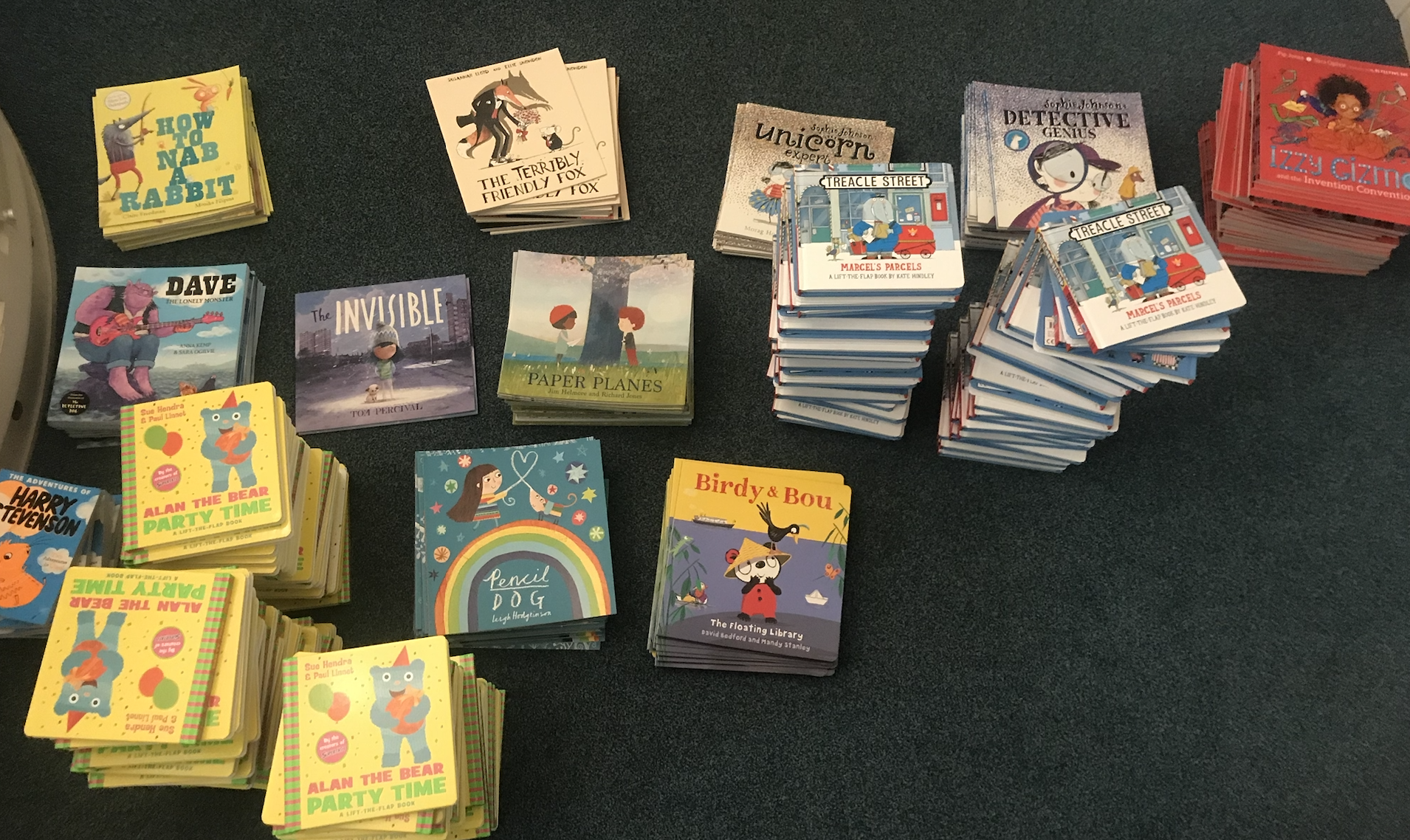
St John’s Foundation was delighted to take receipt of 400 children’s books* courtesy of publisher Simon & Shuster; who generously donated the books to our partner organisation, Feeding Britain, to mark the publication of their latest book, The Invisible.
The book is based on a young girl called Isabel whose family is in poverty; she lives in difficult conditions with parents who are struggling financially. The title of the book Invisible symbolises how, in society, families living in poverty often become overlooked and are made to feel invisible. The book’s overriding message is that everyone is important, regardless of the conditions they live in. Significantly, the deprived living conditions of the book’s main character, Isabel, are reflective of the lives of many of the children we work with – particularly the schools involved in St John’s Primary Empowerment Programme. These schools have a combined average of 46% of disadvantaged pupils on their register and our main objective is to improve the circumstances of these children through supporting foundational reading, writing, oracy and mathematics, as well as their emotional and behavioural wellbeing. These 400 books are set to be distributed to the schools in this Programme.
The importance of children having books to read cannot be understated and St John’s has long recognised the power and influence that reading has on young children. Reading allows, not just children, but adults, to be transported from our own world to another. The knowledge we get from reading is power and with it we can immerse ourselves in different lives, learning from those unlike us. As well as learning about new cultures, we learn new words and phrases and acquire skills and knowledge we didn’t have before.
Research points to the vast benefits of reading from birth onward. In addition to advancing brain development, language skills, and vocabulary, it also can build listening and memory skills. Multiple studies have highlighted that early language exposure increases reading proficiency in later life. Reading needs to be a key part of children’s everyday lives which is why this donation from Simon & Schuster will mean so much, to so many.
However, we are not just focusing on the development of primary school pupils; we have just signed a two-year contract with Bath and North East Somerset Council and Virgin Care to support our Early Years Programme. The aim of this being to support the vocabulary development of children, aged two to four, who have not yet developed as far as their fellow peers due to their social backgrounds and physical and mental health needs. Through the programme, we hope to improve these vital skills before they start school and start to narrow the educational attainment gap in BaNES.
Reading with children helps them to develop a love of reading for life and we hope these books can go towards building this special relationship. Although The Invisible is a children’s book, it’s a stark reminder to us all that we need to care for those currently being overlooked in our society and stand in solidarity with those in-need.
* The books are : Izzy Gizmo and the Invention Convention, Marcel’s Parcels, Dave The Lonely Monster, Paper Planes, The Adventures of Harry Stevenson, Pencil Dog, Sophie Johnson: Detective Genius, How to Nab A Rabbit, Terribly Friendly Fox, Birdy and Bou, Sophie Johnson: Unicorn Expert, Alan The Bear Party Time
We had to act quickly to help her get all the items she needed so that she could turn the empty property into a home. To start with, Anthony, Furniture Project Manager, helped her to complete a grant application to St John’s Foundation Crisis Fund for the basics. This included a bed frame and mattress, drawers, sofa, table and chairs and a kitchen starter set. Some of these items would be new and others from donations to the Furniture Project.
The staff at Curo housing association had already raised an application for a washing machine and fridge freezer which was to be funded through BANES Council’s Welfare Support Scheme.
Anthony then set about making a series of phone calls to speed up the whole process for her move in at the end of the week. By Wednesday afternoon all grants had been approved and the items were assembled at the dispatch areas ready for delivery on the Friday.
On Thursday, however, Jane heard that all the carpets in the property were old and would be removed before she moved in. Another phone call to St John’s determined that there were enough funds to cover the cost of basic carpets. These would have to be laid after she moved in but it would be possible the following week.
On Friday, she moved into her new flat. Anthony and the Genesis team delivered her furniture and fridge freeze. The cooker and washing machine were delivered and installed by Nailsea Contractors and all was completed by 2pm. On the following Monday, the Furniture Project team returned to move the furniture whilst the new carpets were laid by Bath Contract Flooring.
We want to celebrate this example of partnership, collaboration and community. All the agencies worked swiftly together to enable Jane to make her move from homelessness to having a home as stress free as possible. The Genesis Trust cannot operate any of our projects without the mutually supportive community around us. We strive for our Vision of a thriving and supportive community in the Bath area where everyone has hope and a future. We can only hope to achieve this by understanding what each other offers and working together.
For more about our Vision, Mission and Values visit https://genesistrust.org.uk/vision-mission-values/.
It was only when I joined the ILA team at St Johns Foundation that I realised that there was a different way to show care. Along with our values of trust, courage, and kindness, dignity and person-centered care are at the heart of our service. This means we provide an outstanding service that is second to none.
This is why on the 1st of February, we celebrate Dignity in Action day and continue to be the Beacon for other local care services in celebrating and promoting dignity in care.
Becky Tutton
ILS